What Actually Happens When You Return a Mattress
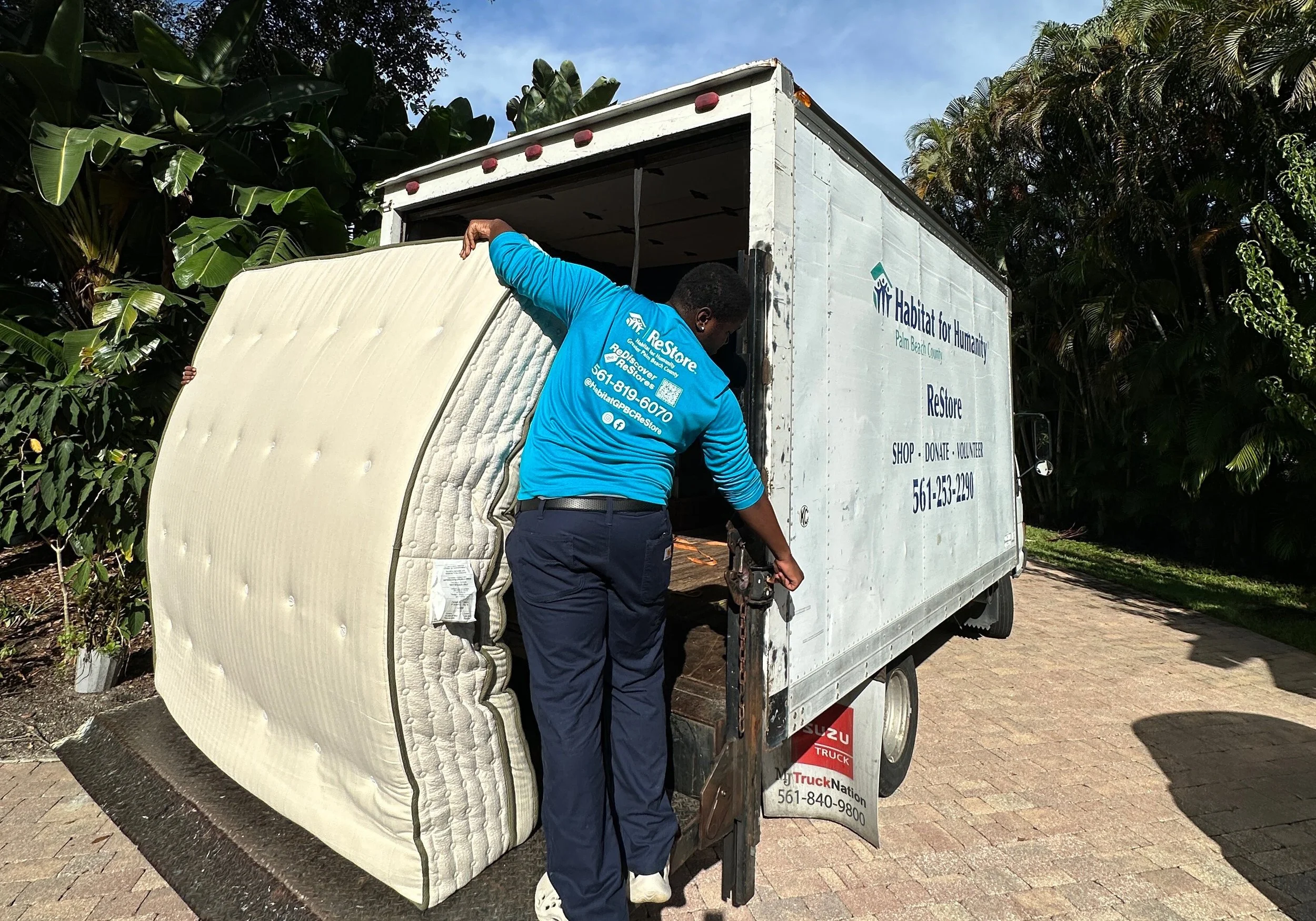
Mattress donation to Habitat for Humanity, Greater Palm Beach County
The 100-night trial is now almost standard in the mattress industry. Most mattress brands and retailers offer one, some stretch to a full year, and the pitch is mostly the same: if you don't love it, send it back, no questions asked (or sometimes with a modest return or restocking fee). Millions of people take them up on it, yet very few ever ask the obvious follow-up question. The returned mattress leaves your house. Where does it really go?
The answer depends entirely on the company you bought it from, and most companies would prefer you don’t ask too many questions.
The five paths
A returned mattress can take one of five routes, roughly in order from best to worst:
Donation.
The mattress is inspected, and if it qualifies, it is donated to a charitable organization that places it with someone in need of a bed. This is the best outcome for a mattress in good condition, and it is also the hardest to operate. It requires inspection standards, a network of nonprofit partners, and trucks that show up. Few companies have built this because nothing about selling mattresses requires it.
Refurbishment and resale.
Some companies clean and recondition returns and resell them, clearly labeled, at a discount. Done honestly, this is a legitimate path. State laws on reselling used bedding vary widely, which is part of why practices differ so much from company to company.
Recycling.
Most of a mattress can be recycled into steel, foam, and fiber. But the economics are split down the middle of the map. In the four states with mattress recycling laws (California, Connecticut, Rhode Island, and Oregon), recycling is funded by a fee collected on every new mattress sold, so dropping one off costs nothing more. Everywhere else, recycling a mattress means paying a private recycler or hauler out of pocket, if one operates nearby at all. Realistically, a returned mattress is only recycled where the routing is funded or when someone chooses to pay for it.
Liquidation.
The mattress is sold in bulk to a liquidator for a small fraction of its retail price, and what happens after that is no longer the brand’s or retailer’s problem or its knowledge. Some liquidated mattresses find second lives. Others are landfilled one transaction later, with the brand's hands technically clean. Once custody is sold, a brand's claims about those mattresses are claims about a transaction, not a destination.
The landfill.
When none of the above is cheaper than disposal, disposal wins. Reverse logistics is expensive, mattresses are bulky, and a company holding a returned mattress in a city with no donation partner and no funded recycling route will often do the math and send it to be buried. The Mattress Recycling Council estimates that more than 50,000 mattresses are discarded in the United States every day.* Returns are part of that stream.
Why don't you know which path your return took
Here is the uncomfortable structure of the trial-return model. The generous return policy is a sales tool. The cost, in monetary terms, is built into the mattress's price. The cost of it, in buried mattresses, is built into nothing. It is an externality, and like most externalities, it survives on not being looked at.
This is not an accusation against any particular company, and it would be wrong to treat the whole industry as a single entity. Practices genuinely vary. A few brands publish commitments about what happens to their returns, including pledges to donate or recycle rather than landfill. Most disclose nothing, which does not necessarily mean the worst, but does mean you cannot know. High donation rates are achievable: the program Sleep for Change grew out of donated 97.3% of eligible returns over six years.** The constraint is not a possibility. It is whether a company decides the routing is worth building.
The question to ask
If you are shopping for a mattress and the trial policy is part of the appeal, add one question before you buy: What happens to this mattress if I return it?
Ask it in the sales chat or by email. A company with a real answer will give it to you, usually proudly. A company without one will send back something soft about sustainability that lacks a noun. The difference is informative.
Notice the word eligible doing work in that 97.3% figure, and in everything we publish. Not every return can be donated; hygiene and condition standards exist for good reason, and any company claiming it donates everything should worry you as much as one claiming nothing. The honest answer is a sorted one: this share donated, this share recycled, this share disposed of, and here is why. One thing you control directly: use a mattress protector from the first night of your trial. A clean, undamaged return is far more likely to qualify for donation, and most brands require it for the refund anyway. The few seconds it takes to put one on may be the difference between your return becoming someone's bed and becoming landfill volume.
Returns are not going away, and they shouldn't. Trying a mattress at home is genuinely better for consumers than five minutes lying on one in a showroom. But a return policy has a back end, and you are allowed to ask about it. Companies that have developed a good answer would love to see the question come up more often.
*Mattress Recycling Council, which operates state mattress recycling programs and publishes industry disposal estimates at mattressrecyclingcouncil.org.
**Figure reflects the Avocado Green Mattress donation program, 2019 to 2025, as reported in Avocado's 2025 Impact Report.1