Bed Poverty Has a Name. It Doesn't Have a Count.
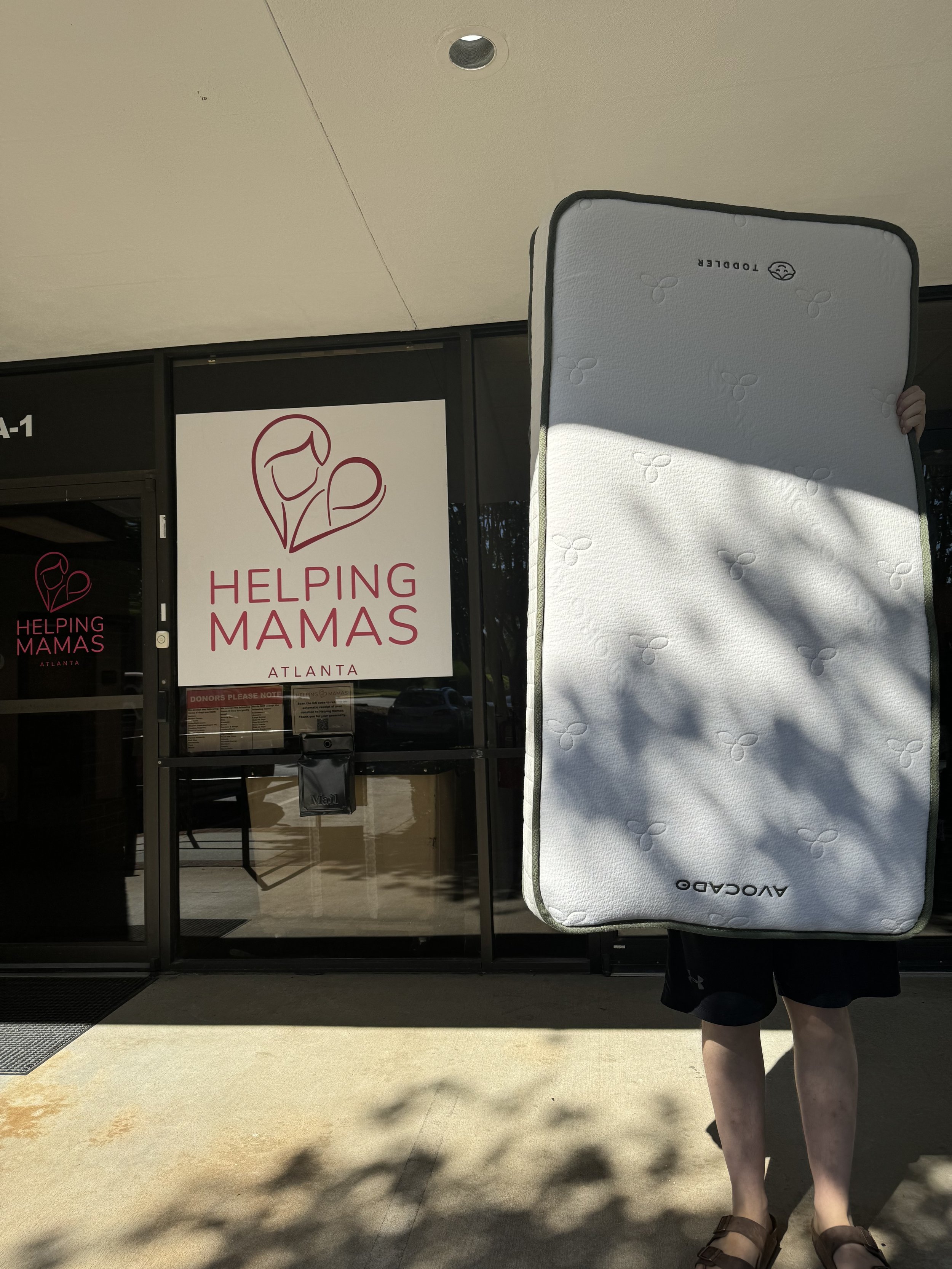
A toddler mattress arrives at Helping Mamas Atlanta, a nonprofit serving mothers and children in need.
There is a term for what happens when a household cannot afford beds for everyone in it: bed poverty. It describes the child sleeping on a couch or a pile of blankets, the siblings sharing a twin, the parent giving up their own bed and sleeping on the floor. The term is useful because it names something that usually goes unnamed. A family can be housed, fed, and clothed, and still have children with no dedicated place to sleep.
What bed poverty does not have, at least in the United States, is a count.
Nobody is measuring this
There is no federal statistic for how many American children lack a bed. No agency tracks it. The census asks how many people live in a home, not how many beds they share. National figures occasionally circulate through nonprofit materials, but trace them back, and they tend to dissolve into estimates of estimates.
Where someone has bothered to count, the numbers are not small. The Furniture Bank of Metro Detroit estimates that roughly 20,000 children lack a dedicated place to sleep across just three Michigan counties. Organizations doing similar work in other regions report the same pattern: the need is large, local, and invisible until an organization goes looking for it.
That invisibility is part of the problem. A child without a bed does not appear in homelessness data because the family has a home. They do not show up in hunger data because the problem is not food. Bed poverty falls between the categories we measure, which means it also falls between the programs we fund.
What the gap looks like up close
The organizations that see bed poverty directly are local nonprofits: furniture banks, family service agencies, and groups serving mothers with young children. They are the ones who walk into an apartment for an unrelated reason and notice there is one mattress for five people. They are the ones families actually tell.
That is why our model routes mattresses through vetted nonprofit partners rather than directly to individuals. We are not in a position to know which family in a given city needs a toddler mattress this week. A local organization that has been working with that family for months knows exactly. Our job is to make sure that when they identify the need, an eligible mattress is available to meet it.
The mattress in the photo above is a toddler size. Somewhere in Atlanta, there was a specific small person it was meant for, identified not by an application portal or a national database but by an organization that knew the family. That is what closing the gap looks like in practice. It is not a program announcement. It is one bed, sized for one child, arriving at the right door.
Naming it is the first step
We have written about why a bed matters and what it costs when good mattresses are buried instead of used. Bed poverty refers to those who are standing in that gap. It deserves to be counted, and until it is, it deserves at least to be named, because problems without names do not get solved.
If you work at a nonprofit that sees bed poverty in your community, we want to know you. If you work at a manufacturer or retailer, your eligible returned and overstock mattresses are the supply for this problem.