A bed is the first piece of furniture that makes a house a home.
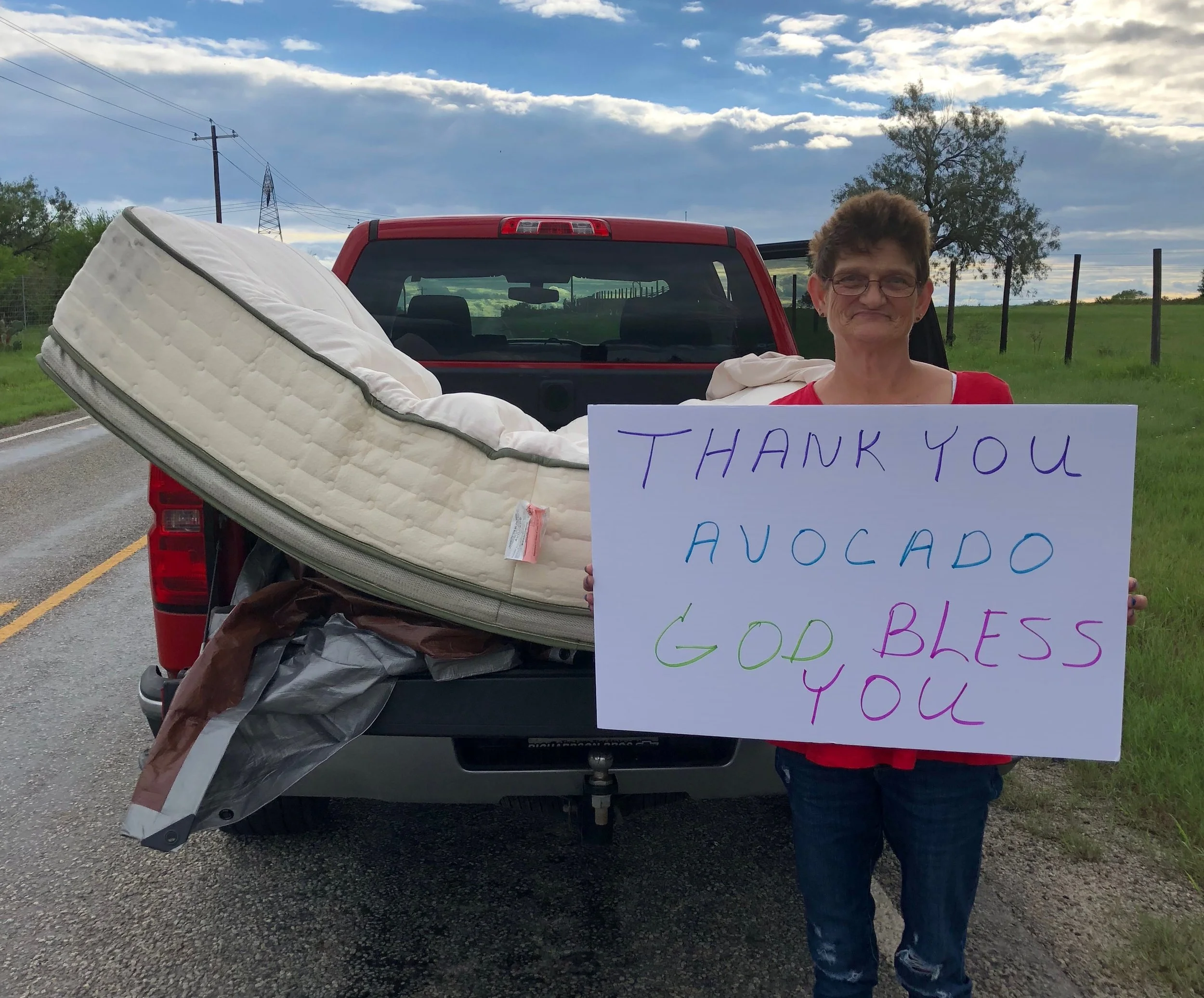
A recipient picks up her donated mattress. Photo from the Avocado Green Mattress donation program, from Sept. 2018.
There is a moment that repeats itself across thousands of deliveries. A mattress comes off a truck, gets carried through a doorway, and lands in a room that has been waiting for it. Sometimes the room belongs to a kid who has been sleeping on a couch. Sometimes it belongs to a family starting over after a fire, an eviction, or a long stretch in a shelter. The furniture is the same every time. What changes is what the room becomes.
A bed is the first piece of furniture that makes a house a home. Not the table, not the television. The bed. It is where a child stops being a guest in someone else's space and starts having a place that belongs to them. It is where an adult who has spent months in survival mode gets the one thing survival mode never allows: real rest.
Sleep is not a luxury, and neither is the thing you sleep on
We talk about sleep as a health issue, and it is. Poor sleep is tied to weakened immune function, slower recovery from illness, and worse outcomes in school and at work. A child who sleeps on the floor does not arrive at school on equal footing with a child who sleeps in a bed. An adult working two jobs and sleeping on an air mattress that deflates by 3 a.m. is fighting a battle before the day starts.
But the case for a bed goes beyond health metrics. A bed signals permanence. It says this address is not temporary; this room is yours. You can stop bracing. People who work in housing services see it over and over: a family can move into an apartment, but the apartment does not feel like theirs until there are beds in it. Until then, it is just a roof.
The gap is a logistics problem
Here is the part that should bother anyone who has thought about it for more than a minute. Good mattresses exist in enormous numbers. Manufacturers and retailers handle returned and overstocked mattresses every day, and many of them are barely used or never used at all. At the same time, people who need beds exist in enormous numbers, in every city and most towns.
The gap between those two groups is not a supply problem or a demand problem. It is a logistics problem: matching eligible returned and overstock mattresses with vetted nonprofit organizations that know exactly which families need them. That is the work. It is unglamorous; it involves trucks, inspection standards, and paperwork, and it changes what a room becomes.
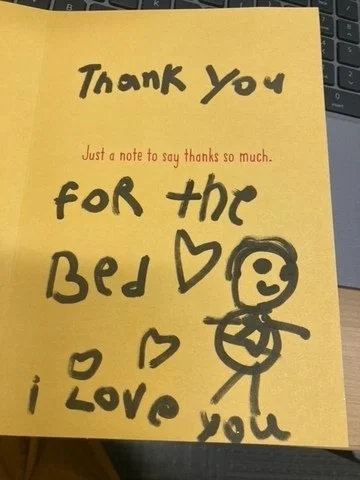
The woman in the photo above made a sign before she drove out to pick up her mattress. Nobody asked her to. She wanted the people on the other end of the donation to know it mattered. That sign is a better argument for this work than any statistic we could publish. The note from a child, shown below, speaks volumes.
What we do with that argument
Sleep for Change exists to close the gap. We route eligible returned and overstock mattresses from manufacturers and retailers to vetted nonprofit partners, who place them with people in need. The model was built and proven inside the Avocado Green Mattress donation program, which donated 97.3% of eligible returns between 2019 and 2025.* Sleep for Change is the next chapter of that work, opened up to the wider industry.
If you work at a manufacturer or retailer and your returned mattresses end up in a landfill, we should talk. If you run a nonprofit that serves families who need beds, we want to know you. And if you are reading this in a home with a bed in every room, we would ask you to notice, just once, how much of your sense of home depends on that.
*Figure reflects the Avocado Green Mattress donation program, 2019 to 2025, as reported in Avocado's 2025 Impact Report.